
Seed germination and transplanting seedlings
Every harvest starts with a single seed. Learn how to reliably germinate seed in rockwool or sponge, why a humidity dome is your best friend, and how to spot the perfect moment to transplant a seedling into the tower.
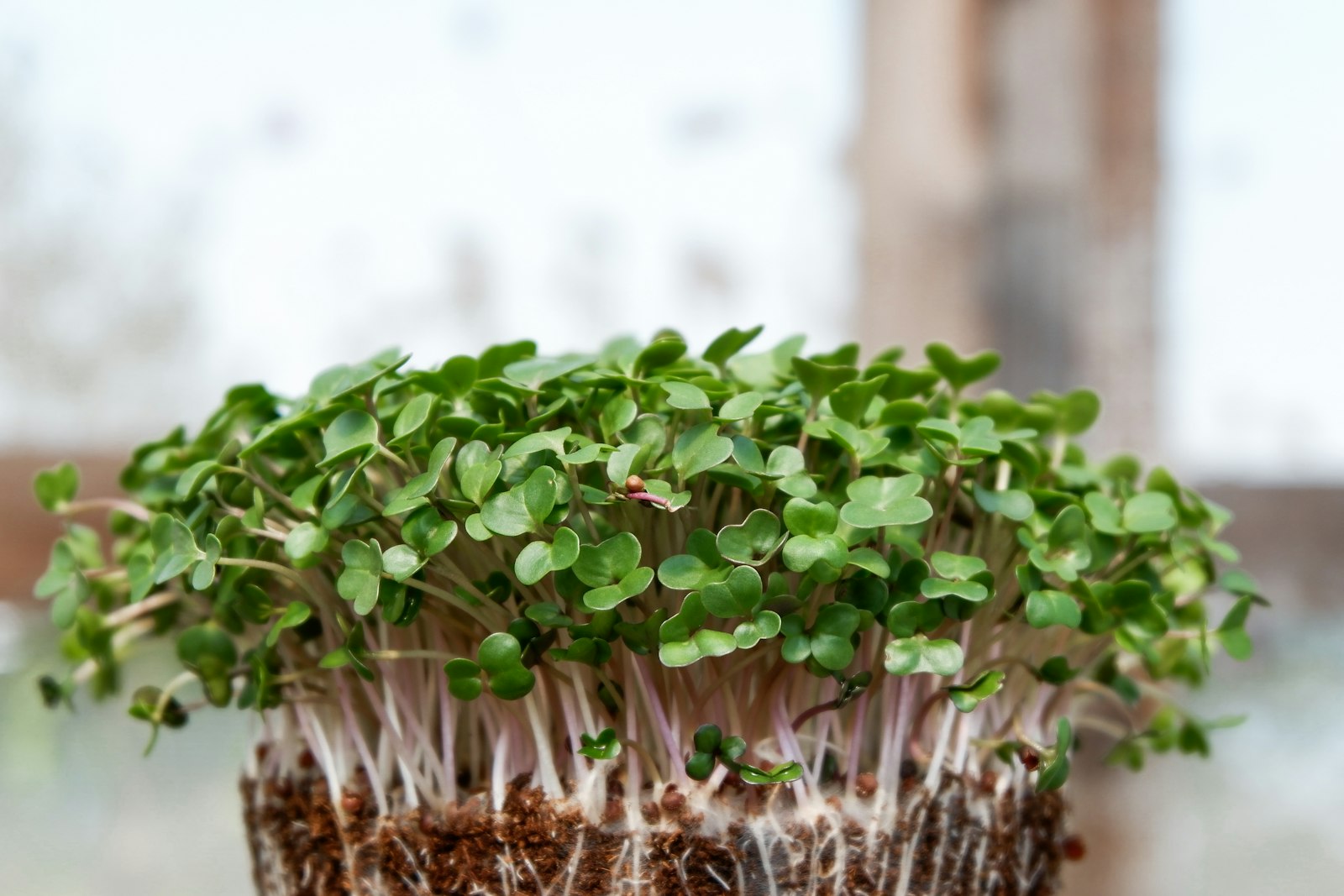
It all starts with a seed
The most thrilling moment in hydroponics isn't the harvest — it's the first time you spot a tiny green loop breaking through the medium. Germination is the foundation of everything; if a seedling starts healthy and strong, the rest of the grow almost runs itself. If it falters at the start, no LED or perfect solution can fix that later.
The good news: germination for hydroponics is simple and clean. No soil, no mess, and a high success rate because you fully control moisture, warmth and light. In this guide we walk the whole path — from choosing a medium to the moment you move the seedling into the tower. For the bigger picture, see also types of hydroponic systems.
Choosing a germination medium
In hydroponics, seed germinates not in soil but in an inert medium that holds moisture and air around the roots. The two most common options:
- Rockwool: cubes of melted volcanic fibres. They hold moisture and air beautifully, are stable and reliable. Before use, soak them in water gently acidified to pH ~5.5 (rockwool starts out alkaline), then drain so they're moist but not waterlogged.
- Sponge plugs: soft, already pH-neutral and very beginner-friendly. Just moisten and press in the seed.
Both go into a seed tray with holes. Place the seed in the central hole at a depth of 2–3 times the seed's diameter — fine seed (lettuce, basil, petunia) almost on the surface, larger seed (cucumber, nasturtium) a little deeper.
Three conditions for reliable germination
A seed needs only three things to germinate: moisture, warmth and air. Light is not required by most seeds at this stage (with exceptions like lettuce and petunia, which like light to germinate).
| Condition | Target | Note |
|---|---|---|
| Temperature | 20–24 °C | many species like 21–27 °C; a heat mat helps in winter |
| Humidity (air) | above 90 % | achieved with a humidity dome |
| Medium moisture | moist, not waterlogged | a saturated medium suffocates the root |
| Light | not needed until emergence | lettuce/petunia: gentle light |
| Solution EC | 0 (plain water) | no fertiliser until true leaves |
The key rule: no nutrients until true leaves appear. The seed carries enough food for the first phase, and fertiliser at this stage only harms and feeds algae.
The humidity dome — your mini greenhouse
A clear dome over the tray holds in moisture and warmth, creating a microclimate where seed germinates fast and evenly. Humidity under the dome easily exceeds 90 %, just as the seed likes it.
Two rules for the dome:
- Vent once a day (lift the dome for a minute) to prevent mould and stale air.
- Remove the dome a day or two after the first green loops appear. Hold it too long and seedlings stretch and soften, raising the risk of "damping-off" disease.
No dome? A clear bag or the lid of a transparent box works too — all that matters is keeping the moisture in.
From emergence to true leaves
The first leaves to appear aren't "true" leaves — they are cotyledons (seed leaves), the food reserves from the seed. They're usually simple and smooth, and look similar across most plants. Only the next pair, which already resembles the shape of the mature plant, are the true leaves.
This transition is a crucial signal:
- As soon as the first true leaves appear, the seedling has used up the seed's reserves and is ready for its first, very mild nutrient solution (EC ~0.4–0.8). Strengthen it gradually as the plant grows.
- The seedling now needs light — under an LED or at a bright window — otherwise it will stretch in search of it.
Leggy, pale, thin seedlings almost always mean too little light or too long under the dome. Better a little more light and a lower-set source than floppy seedlings.
When to transplant into the tower
The most common beginner mistake is transplanting too early or too late. Here are reliable signs a seedling is ready:
- Roots peek out of the bottom of the plug or cube — the most important sign.
- The seedling has 2–4 true leaves and a firm, upright stem.
- Height roughly 5–8 cm.
When all three are met, the seedling is strong enough to take the move and grow away immediately. Wait too long and the roots tangle into a knot, and the seedling stalls.
The transplanting process itself
- Prepare the tower with a solution at an already-adjusted EC and pH for a young plant.
- Gently lift out the plug with the seedling — hold it by a leaf or the plug, never by the stem. A broken stem means a dead seedling.
- Insert the plug into the tower's net cup so the roots hang down and the cotyledons stay above the medium.
- For the first two or three days keep a milder solution and slightly softer light until the seedling settles, then return to normal.
Stratified seed and special cases
Some plants need an extra nudge:
- Hard-coated seed (e.g. nasturtium) germinates faster if soaked overnight first.
- Certain perennials and berries need cold stratification (a few weeks in the fridge) — which is why we prefer to start strawberries from plants, as described in our guide on strawberries and berries.
- Flowers like petunia and marigold germinate easily; find details on light and post-transplant care in flowers and ornamental plants.
Common problems and fixes
- Seed won't germinate: seed too old, too cold (below 18 °C), or the medium too dry/too wet. Check temperature and moisture.
- Seedlings stretch: too little light or the dome kept on too long. Lower the light source, remove the dome.
- Damping-off (seedling flops and rots at the base): too much moisture and poor ventilation — vent, don't waterlog, and mind medium hygiene (cleaning and algae).
- Green slime on plugs: algae from light and nutrients on a wet medium — don't feed before true leaves and don't overwater.
With a little practice, germination becomes a routine you do in a tray on the kitchen counter. And that first green shoot delights you just as much every time. For the bigger picture of how this fits into a hydroponic system, see what is hydroponics and the beginner's guide.
Key takeaways
- Germinate in rockwool or sponge — moist, not waterlogged; rinse rockwool first to pH ~5.5.
- Hold 20–24 °C and humidity above 90 % under a dome; vent once a day.
- No fertiliser until true leaves appear; only then introduce a very mild solution.
- Transplant when roots peek out and the plant has 2–4 true leaves and is 5–8 cm tall.
- When transplanting, hold by a leaf, never the stem.
- Leggy, pale seedlings = too little light; lower the LED and remove the dome in time.
Related articles
🥬 Plants & seeds
Best plants for a hydroponic tower (for beginners)
Starting your first tower? Begin with plants that forgive mistakes. Here is a tested shortlist of fast, rewarding crops, complete with a difficulty table, days-to-harvest and hands-on tips.
 🥬 Plants & seeds
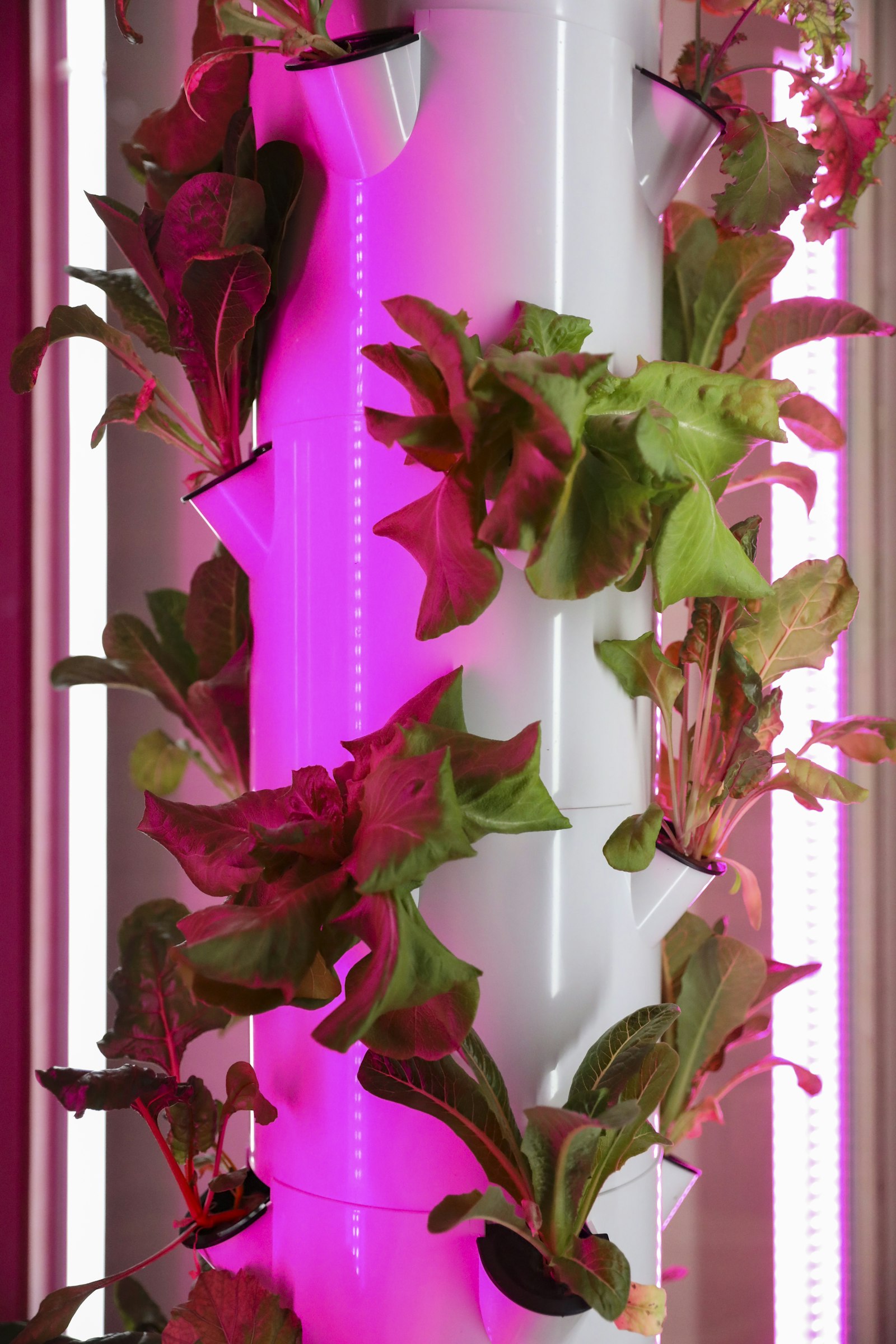
Growing salads and leafy greens in a tower
Lettuce is the queen of the hydroponic tower: fast, rewarding and undemanding. We take you from seed to crisp head—EC, pH, spacing, cut-and-come-again, and how to stop premature bolting.
 🥬 Plants & seeds
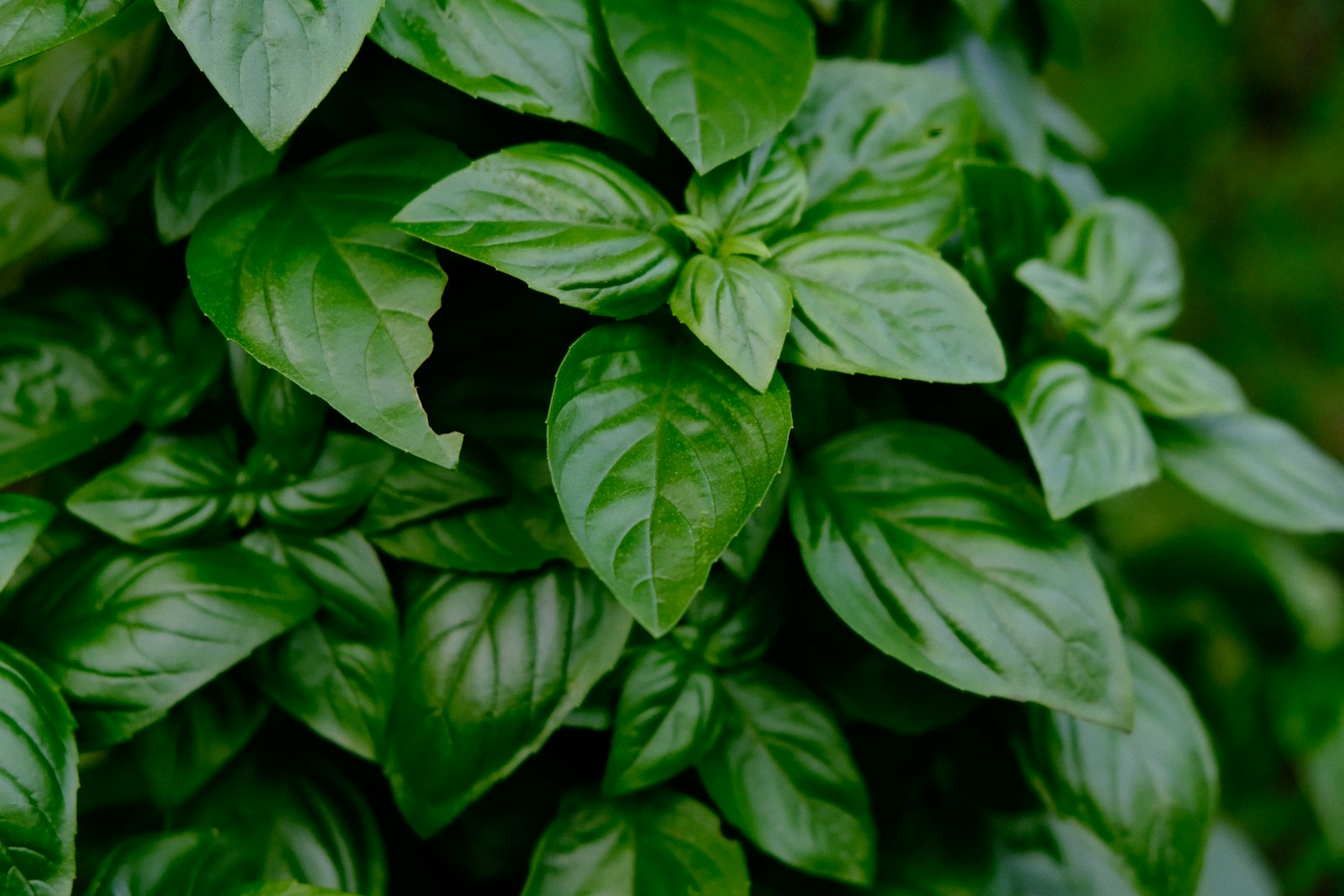
Herbs in hydroponics (basil, parsley, mint…)
Fresh basil, parsley and mint within arm's reach, all year round. We cover germination, EC and pH per herb, pinching for bushiness, and a harvest that returns week after week.