
Understanding EC and pH
EC and pH are the two numbers that decide your hydroponic success. Learn what they mean, which values to target per crop, and how to adjust them easily in a home tower.
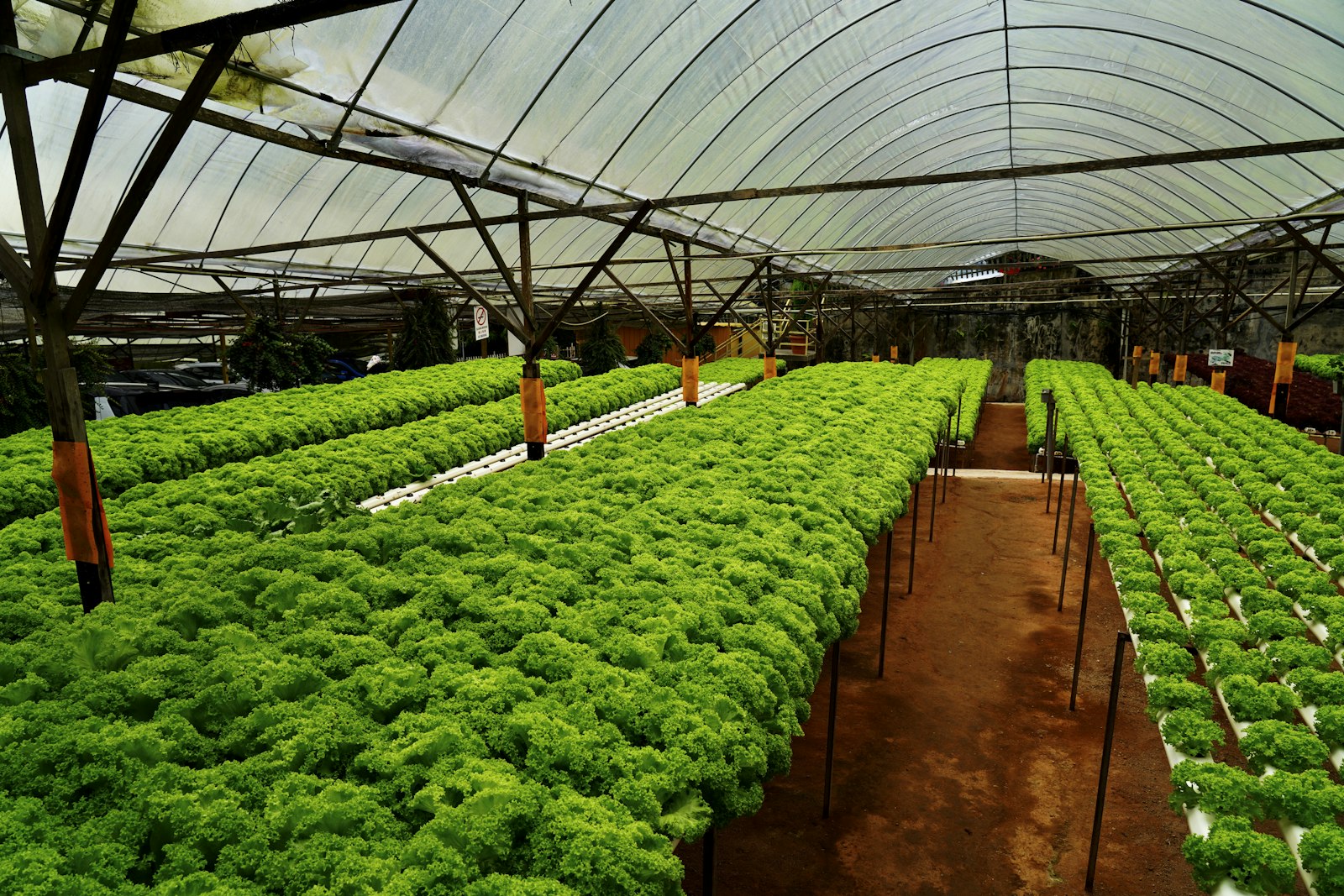
The two numbers that decide whether your grow succeeds
If you were only allowed to measure two things in your hydroponic tower, they would be EC and pH. These two numbers tell you how much food is floating in the water and in what form that food exists — in other words, how much of it the plant can actually take up. Everything else (growth, leaf colour, yield) is a consequence of what happens to these two values.
The good news: you don't need to be a chemist. You need a cheap EC/TDS meter, a cheap pH meter, and five minutes every other day. This guide explains what EC and pH really mean, which values to target for which plant, and how to adjust them in a home tower.
What is EC?
EC (electrical conductivity) measures how conductive the water is, which depends on how many dissolved salts — that is, nutrients — it contains. The more dissolved minerals, the higher the conductivity. EC is expressed in mS/cm (millisiemens per centimetre); you'll sometimes see µS/cm (1 mS/cm = 1000 µS/cm).
Many cheap meters display TDS in ppm (total dissolved solids). That's just EC multiplied by a conversion factor. The catch is that two factors exist:
- NaCl scale (ppm 500): ppm = EC × 500
- 442 / KCl scale (ppm 700): ppm = EC × 700
So whenever you can, record your values in mS/cm — it's unambiguous. If your meter shows ppm, check which scale it uses.
Important: EC tells you how much nutrient is in the water, not which nutrients. Two solutions can have identical EC yet a completely different ratio of elements. That's why a well-balanced fertiliser (such as the dojdi mixes) does half the work for you — you only track total strength.
Target EC values by crop
| Crop / stage | EC (mS/cm) | Note |
|---|---|---|
| Seedlings & transplants | 0.4 – 0.8 | Young plants "burn" easily |
| Lettuce, lamb's lettuce, rocket | 0.8 – 1.2 | Light feeders |
| Herbs (basil, parsley) | 1.0 – 1.6 | Basil likes it a touch stronger |
| Chard, kale, spinach | 1.4 – 1.8 | Medium feeders |
| Strawberries & berries | 1.4 – 2.0 | Lower in flowering, higher in fruit |
| Tomato, pepper, cucumber | 2.0 – 2.8 | Heavy feeders |
These are guidelines for a moderate indoor setting. In a very warm room or under strong LED light, nudge EC down slightly, because the plant drinks more water than it eats nutrients.
What is pH?
pH measures the acidity of a solution on a scale of 0 to 14. Seven is neutral, lower is acidic, higher is alkaline. In hydroponics pH is critical because it governs the availability of individual nutrients. An element can be physically present in the water, but if the pH is wrong the roots can't pull it in.
Most leafy vegetables and herbs do best in this range:
| pH range | State |
|---|---|
| 5.5 – 6.5 | Ideal for most hydroponic crops |
| 5.8 – 6.2 | The "sweet spot" for lettuce and herbs |
| < 5.5 | Risk of calcium and magnesium deficiency |
| > 6.5 | Iron, manganese and phosphorus become locked out (pale new leaves are common) |
Strawberries and berries prefer it slightly more acidic, around 5.5 – 6.0. Tomato and pepper tolerate 5.8 – 6.3.
Why pH "drifts"
In a closed reservoir pH naturally changes:
- As the plant takes up nutrients, the ion balance shifts and pH usually rises.
- Warm water and algae can push it further.
- A small volume of water (small tower, 5–10 L) changes pH faster than a large one — there's less "buffer".
That's why you check pH regularly, not once a month.
Adjusting EC and pH in practice
The order is sacred: set EC first (add fertiliser), then adjust pH. Adding fertiliser itself shifts pH, so doing it the other way round makes no sense.
Adjusting EC
- Fill the reservoir and measure the "starting" EC (see the article on water quality).
- Add fertiliser gradually, stir, and measure. Better to add more than to overshoot.
- If EC is too high, dilute with clean water. The full procedure is in the guide How to mix and dose liquid nutrients.
Adjusting pH
- pH too high (alkaline): add pH Down (usually phosphoric or citric acid) a few drops at a time, stir, wait a minute, re-measure.
- pH too low (acidic): add pH Up (potassium hydroxide) just as carefully.
Work in small steps. A drop too few is easier to fix than a whole bottle too many.
How often to measure?
- Small tower (up to 30 L): every 1–2 days.
- Larger tower (over 30 L): every 2–3 days.
- Always measure after topping up water — topping up with plain water lowers EC, while adding fertiliser raises it.
Common myths
- "More fertiliser = faster growth." No. Excessive EC pulls water out of the roots (osmotic stress) and the leaf looks scorched at the edges.
- "pH must be exactly 6.0." It doesn't. The goal is a range, not a single decimal. Gentle drift within 5.5–6.5 is actually helpful, since different nutrients have different optimums.
- "You don't need an expensive meter." A cheap one is plenty, but you must calibrate it with buffer solution (pH 4.0 and 7.0). An uncalibrated meter is worse than none.
Quick diagnostic reminder
- Brown, dry leaf edges → likely EC too high.
- Slow growth, the whole leaf pale → likely EC too low.
- Pale young leaves with green veins → pH probably too high (iron locked out).
- More on symptoms in Nutrient deficiency symptoms.
Key takeaways
- EC measures how much food is in the water; pH decides how much of that food is available to the roots.
- Aim for EC 0.8–1.4 mS/cm for leafy greens, 2.0–2.8 for fruiting crops, and pH 5.5–6.5 for almost everything.
- Always set EC first, then pH; work in small steps.
- Calibrate your meters and measure regularly — small towers drift faster.
- A balanced fertiliser (e.g. the dojdi line) handles the element ratio for you, so you only track two numbers.
Related articles
 💧 Nutrients & water
Nutrient solution: macro- and micro-elements explained
Which elements does a plant need and what does each one do? A guide through the macro- and micronutrients of a hydroponic solution, with the mobile/immobile rule that speeds up diagnosis.
 💧 Nutrients & water
Water quality in hydroponics (chlorine, hardness, RO water)
Water sets the foundation of every hydroponic solution. Learn how chlorine, chloramine, hardness and RO water affect your tower, and how to prepare ideal base water in a few steps.
💧 Nutrients & water
How to mix and dose liquid nutrients
Step by step to a perfect solution: mixing order, the A-then-B rule, a per-crop dosing table, and the most common mistakes to avoid.