
Nutrient deficiency symptoms and how to spot them
Learn to read a leaf like an instrument: where a symptom appears, what the colour means, and how to tell a real deficiency from a pH problem. With a per-element symptom table.
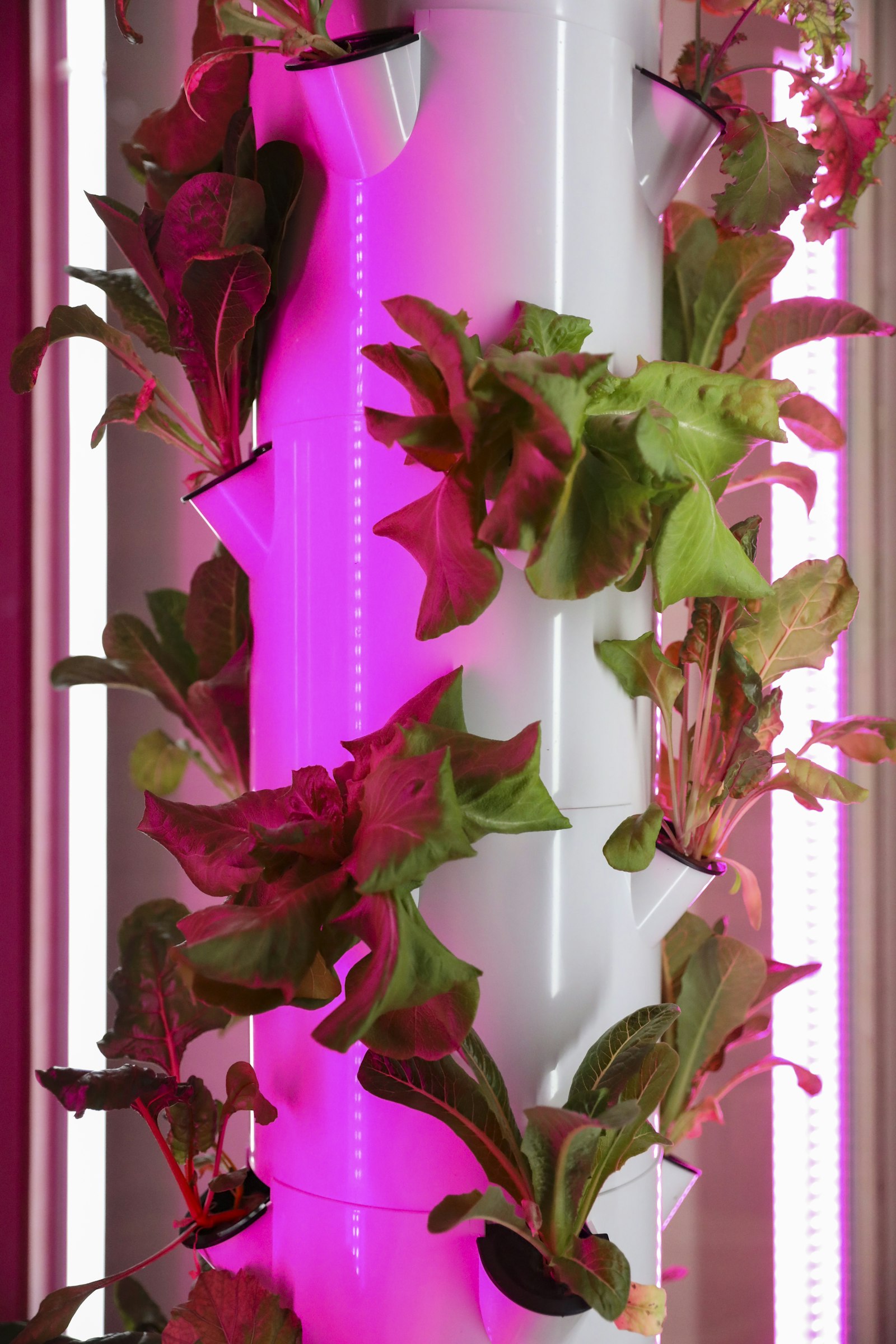
The plant is talking — learn to read it
A leaf is the best measuring instrument in your tower. Before an EC meter or a pH strip shows a problem, the plant is already drawing it out in colour, shape and the position of the damage. The trouble is that a hungry plant and a sick plant can look alike, and panic usually leads to over-fertilising that only makes things worse.
This article gives you a systematic way to read symptoms: where to look, what the colour means and — most importantly — how to tell a real nutrient deficiency from a pH problem (which looks the same but is fixed differently).
First rule: where does the symptom appear?
The fastest diagnostic shortcut is position. Some elements move through the plant, some don't:
- Mobile elements (N, P, K, Mg): the plant relocates them from old to new leaves, so deficiency strikes the lower, older leaves first.
- Immobile elements (Ca, Fe, Mn, B, S, Zn): they stay put, so deficiency hits young leaves and tips.
So the first question is always: are the symptoms up top (young leaves) or down low (old leaves)? That alone halves your list of suspects.
Second rule: which colour and which pattern?
- Whole-leaf yellowing → usually nitrogen (if low down) or sulphur (if up top).
- Yellow patches between green veins (interveinal chlorosis) → magnesium (low) or iron/manganese (up top).
- Brown, dry edges ("scorch") → potassium or EC too high.
- Purple/reddish tints → often phosphorus (especially in the cold).
- Deformed, lumpy young leaves, black fruit tips → calcium or boron.
Deficiency symptom table
| Element | Mobility | Where it shows | Typical symptom |
|---|---|---|---|
| Nitrogen (N) | mobile | older, lower leaves | uniformly pale-yellow leaves, slow growth, small plant |
| Phosphorus (P) | mobile | older leaves | dark green to bluish leaves with purple/reddish tints, slowed growth |
| Potassium (K) | mobile | older leaves | yellow then brown leaf edges and tips ("scorch"), weak stems |
| Magnesium (Mg) | mobile | older leaves | interveinal chlorosis — yellow between veins, veins stay green |
| Sulphur (S) | weakly mobile | young leaves | uniform yellowing of young leaves (nitrogen-like, but up top) |
| Calcium (Ca) | immobile | young leaves, tips | deformed, lumpy young leaves; blossom-end rot on tomato/pepper |
| Iron (Fe) | immobile | young leaves | strong interveinal chlorosis of young leaves, narrow green veins |
| Manganese (Mn) | immobile | young leaves | interveinal chlorosis (milder than Fe), sometimes brown spots |
| Zinc (Zn) | immobile | young leaves | small, clustered leaves ("rosette"), short internodes |
| Boron (B) | immobile | tips, fruit | death of growing tips, brittle tissue, deformed fruit |
| Copper (Cu) | weakly mobile | young leaves | wilted, dark tips, weakened growth |
For more on the role of each element, read Nutrient solution: macro- and micro-elements explained.
Third rule: before panic — check the pH!
This is the most important tip in the article. The most common "deficiency" in home hydroponics is not a real shortage but a nutrient locked out by the wrong pH.
The classic example: young leaves go pale with green veins (looks like iron deficiency). You add more iron — no effect. The reason? pH is above 6.5, so the iron, though present in solution, is unavailable to the roots. Bring pH down to 5.5–6.5 and the chlorosis clears on its own.
So the diagnostic order is:
- Measure pH. Outside 5.5–6.5? Fix that before anything else (see the EC and pH guide).
- Measure EC. Too low → the plant is simply starving; add fertiliser. Too high → the edge "scorch" is from salt, not deficiency; dilute.
- Only then start thinking about a specific element.
- Consider when you last changed the solution. Old solution has a skewed ratio — the plant has used up some elements while others have built up.
Common scenarios and what to do
Lower leaves yellow uniformly, plant has slowed. → Classic nitrogen deficiency, or EC is too low. Check EC; if it's low, strengthen the solution or refresh it.
Young leaves fade, veins stay green. → Most likely pH too high (iron locked out). Lower the pH; if it doesn't recover in a few days, refresh the solution.
Brown, dry leaf edges. → If EC is high — salt is scorching the edge, dilute. If EC is normal — possible potassium deficiency or stress from heat/dry air (see Temperature, humidity and airflow).
Black, sunken tip on a tomato or pepper fruit. → Blossom-end rot = local calcium shortage, often from uneven watering or low pH. Stabilise pH and the solution level.
Young leaves small and clustered into a rosette. → Possible zinc deficiency; check pH and refresh with a complete fertiliser.
When it isn't a deficiency but something else
Not every blemish is hunger. Also consider:
- Pests and disease (aphids, mildew) — spots, stickiness, webbing. See Pests and diseases.
- Algae and a dirty system that consume oxygen and nutrients — see Cleaning and algae.
- Light and temperature — too-weak light gives pale, stretched plants; see the LED lighting guide.
The best defence: prevention
Most deficiencies never happen if you:
- hold pH at 5.5–6.5 and measure it regularly;
- use a complete, balanced fertiliser (e.g. the dojdi mixes) that already carries every macro- and micronutrient in the right ratio;
- change the solution every 1–2 weeks to keep the ratio correct;
- mind the quality of your base water (see Water quality).
Key takeaways
- Position reveals the culprit: old leaves → mobile elements (N, P, K, Mg); young leaves → immobile (Ca, Fe, Mn, B, S, Zn).
- Before suspecting a deficiency, check pH and EC — most "deficiencies" are really a nutrient locked out by the wrong pH.
- Interveinal chlorosis low down = magnesium; up top = iron. Brown edges = potassium or EC too high. Deformed tips = calcium/boron.
- Old solution skews the ratio — regular changes prevent half your problems.
- The best cure is prevention: stable pH, a balanced fertiliser and clean water.
Related articles
 💧 Nutrients & water
Understanding EC and pH
EC and pH are the two numbers that decide your hydroponic success. Learn what they mean, which values to target per crop, and how to adjust them easily in a home tower.
 💧 Nutrients & water
Nutrient solution: macro- and micro-elements explained
Which elements does a plant need and what does each one do? A guide through the macro- and micronutrients of a hydroponic solution, with the mobile/immobile rule that speeds up diagnosis.
 💧 Nutrients & water
Water quality in hydroponics (chlorine, hardness, RO water)
Water sets the foundation of every hydroponic solution. Learn how chlorine, chloramine, hardness and RO water affect your tower, and how to prepare ideal base water in a few steps.