
Temperature, humidity and airflow
Light and nutrients are only half the story; the climate around the plant is the other half. Learn the ideal ranges for temperature, humidity and airflow, plus the basics of VPD.
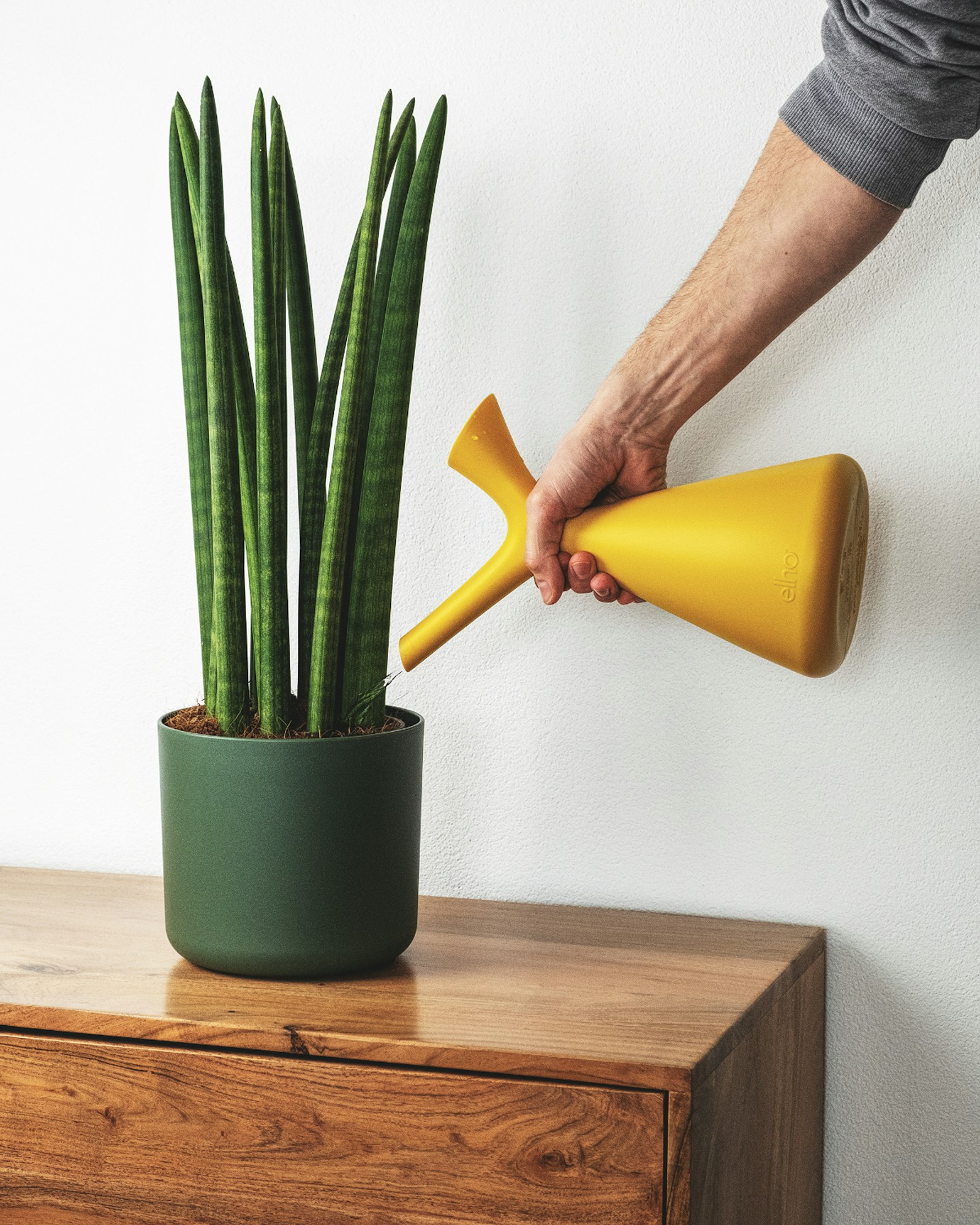
The climate a plant feels
Most beginners focus on light and the nutrient solution, and forget the third pillar of success: the climate around the plant. Temperature, humidity and airflow quietly decide whether your lettuce will be lush and crisp or limp and covered in mould. The good news is that all three are easy to monitor with a cheap thermometer and hygrometer, and just as easy to adjust with simple tools - a fan, a window or a heater.
In this article we walk through the ideal ranges for home hydroponic growing and explain how temperature and humidity combine to create VPD - a single indicator that tells you how comfortable your plant really "feels".
Temperature: not too cold, not too hot
Plants are like us - they have a comfortable range in which they perform best. For most leafy greens and herbs that is 18-24 °C air during the day, with a slightly lower night temperature (around 15-18 °C). That gentle day-night difference is actually healthy and encourages sturdy growth.
An important and often-forgotten number is the nutrient solution temperature. The ideal is 18-22 °C. Why? Warm water holds less dissolved oxygen, and roots need oxygen just as much as leaves do. Above about 24 °C the risk of root rot (Pythium) climbs, while below 15 °C the roots slow their nutrient uptake and the plant "starves" even though the solution is full of food.
- Leafy greens and lettuces prefer it cooler; they tolerate 15 °C, and at high temperatures lettuce tends to "bolt" (run to flower early) and turn bitter.
- Warm-climate herbs (basil) like the upper end of the range, around 22-26 °C, and suffer in the cold.
- Fruiting crops (tomato, pepper) also prefer warmth, 22-26 °C during the day.
Humidity: the sweet spot is 50-70%
Relative humidity tells you how "full" the air is with water vapour. For most home crops, aim for 50-70%.
- Too low (below 40%), typical of heated flats in winter, forces the plant to lose water too fast. Leaves wilt, edges dry out, and in the extreme the stomata close and growth stops.
- Too high (above 75%), typical of basements and bathrooms, is a perfect breeding ground for mould, powdery mildew and grey mould (Botrytis). At very high humidity the plant transpires poorly and absorbs nutrients more slowly.
Seedlings and young transplants like slightly more humid air (65-75%) because their roots are not yet developed; mature plants prefer the lower end of the range.
VPD: how temperature and humidity work together
Humidity alone does not tell the whole story, because the same percentage means something completely different at 18 °C and at 28 °C. That is why professionals look at VPD (Vapor Pressure Deficit), expressed in kPa.
In simple terms, VPD measures how "thirsty" the air is. It is the driving force behind transpiration - the evaporation of water from leaves - which also pulls water and nutrients through the plant. Too little VPD = humid, saturated air, the plant barely transpires, mould grows. Too much VPD = dry air, the plant loses more water than it can replace.
Reference VPD ranges:
- Seedlings and transplants: 0.4-0.8 kPa (more humidity, a gentler environment)
- Vegetative growth (leaves): 0.8-1.2 kPa
- Flowering and fruiting: 1.0-1.5 kPa
You do not have to calculate VPD by hand - many free online calculators give you the value as soon as you enter temperature and humidity. The key message is simple: adjust temperature and humidity together. If VPD is too low (air too humid), lower humidity through ventilation or raise the temperature slightly. If it is too high (air too dry), raise humidity or lower the temperature.
Airflow: the invisible guardian of plant health
Still, stagnant air is the quiet killer of indoor growing. A thin layer of humid air (the boundary layer) forms around every leaf; if nothing breaks it up, moisture lingers and mould gets perfect conditions. Gentle air movement solves a whole list of problems at once:
- Prevents mould and disease by drying leaves and breaking up the humid layer.
- Strengthens stems. Plants exposed to a gentle breeze develop firmer, thicker stems - as if they were "exercising".
- Delivers CO2. Air movement replenishes CO2 around the leaves; without it, photosynthesis slows.
- Deters pests. Fungus gnats, whiteflies and mites settle less readily in a breezy space.
In practice, one small fan that gently stirs the air so the leaves just barely sway is enough. Do not aim it directly and forcefully at tender seedlings - the goal is a soft breeze, not a gale. In a windowless space, add occasional air exchange (a cracked door or a small extraction fan) so fresh, CO2-rich air can get in.
Table: ideal ranges for home growing
| Parameter | Seedlings / transplants | Leafy greens & herbs | Fruiting crops |
|---|---|---|---|
| Air temperature (day) | 20-24 °C | 18-24 °C | 22-26 °C |
| Air temperature (night) | 18-20 °C | 15-18 °C | 18-20 °C |
| Solution temperature | 18-22 °C | 18-22 °C | 20-24 °C |
| Relative humidity | 65-75% | 50-70% | 50-65% |
| Target VPD | 0.4-0.8 kPa | 0.8-1.2 kPa | 1.0-1.5 kPa |
| Airflow | very gentle | gentle, constant | gentle, constant |
Quick problem diagnosis
- Limp, drooping leaves in high heat: too hot and/or VPD too low - ventilate, add a fan, cool the solution.
- Dry, crispy leaf edges: air too dry (VPD too high) or solution too warm - raise humidity or bring the hygrometer back to normal.
- White or grey coatings, slimy mould: too much humidity and poor airflow - increase ventilation, lower humidity.
- Slow growth despite good light and food: check the solution temperature; cold solution stalls nutrient uptake.
If that sounds like a lot to track, do not worry - most home setups, including compact dojdi towers, stay within healthy ranges with basic care: a thermometer, a hygrometer, a small fan and a timer. Once you find the rhythm, climate stops being a worry and becomes a habit.
Key takeaways
- Aim for 18-24 °C air and 18-22 °C solution; warm water loses oxygen and invites root rot.
- Keep relative humidity at 50-70%; seedlings prefer it more humid (65-75%).
- VPD combines temperature and humidity into one number - target 0.8-1.2 kPa for vegetative growth. Adjust them together.
- Constant, gentle airflow prevents mould, strengthens stems, delivers CO2 and deters pests.
- A cheap thermometer, hygrometer and small fan solve 90% of climate problems in home growing.
Related articles: LED grow lighting | Growing without natural light | Pests and diseases | Water quality
Related articles
 💡 Light & environment
LED grow lighting: spectrum, PPFD and photoperiod
Light is food for a plant. Learn what spectrum, PPFD, DLI and photoperiod really mean, and exactly how much light your lettuce, herbs and fruiting crops need to thrive.
 💡 Light & environment
Growing without natural light (basements and apartments)
No sunlight? No problem. A practical guide to growing lettuce and herbs in a basement, pantry or north-facing flat - from choosing a lamp to managing humidity, air and heat.