
Growing without natural light (basements and apartments)
No sunlight? No problem. A practical guide to growing lettuce and herbs in a basement, pantry or north-facing flat - from choosing a lamp to managing humidity, air and heat.
Sunlight is optional
One of the loveliest promises of hydroponics is this: you can grow fresh food anywhere. No garden, no balcony, not even a window. A cold north-facing flat, a dark pantry, a garage or a basement - all of them can become a productive garden if you give plants the one thing nature usually provides: light.
Growing in a space without natural light actually has advantages. You get total control: no cloudy days, no short winter afternoons, no scorching summer sun. Your lettuce gets the same perfect "day" every single day of the year. This guide shows how to set that up simply and reliably.
Step 1: Light is everything
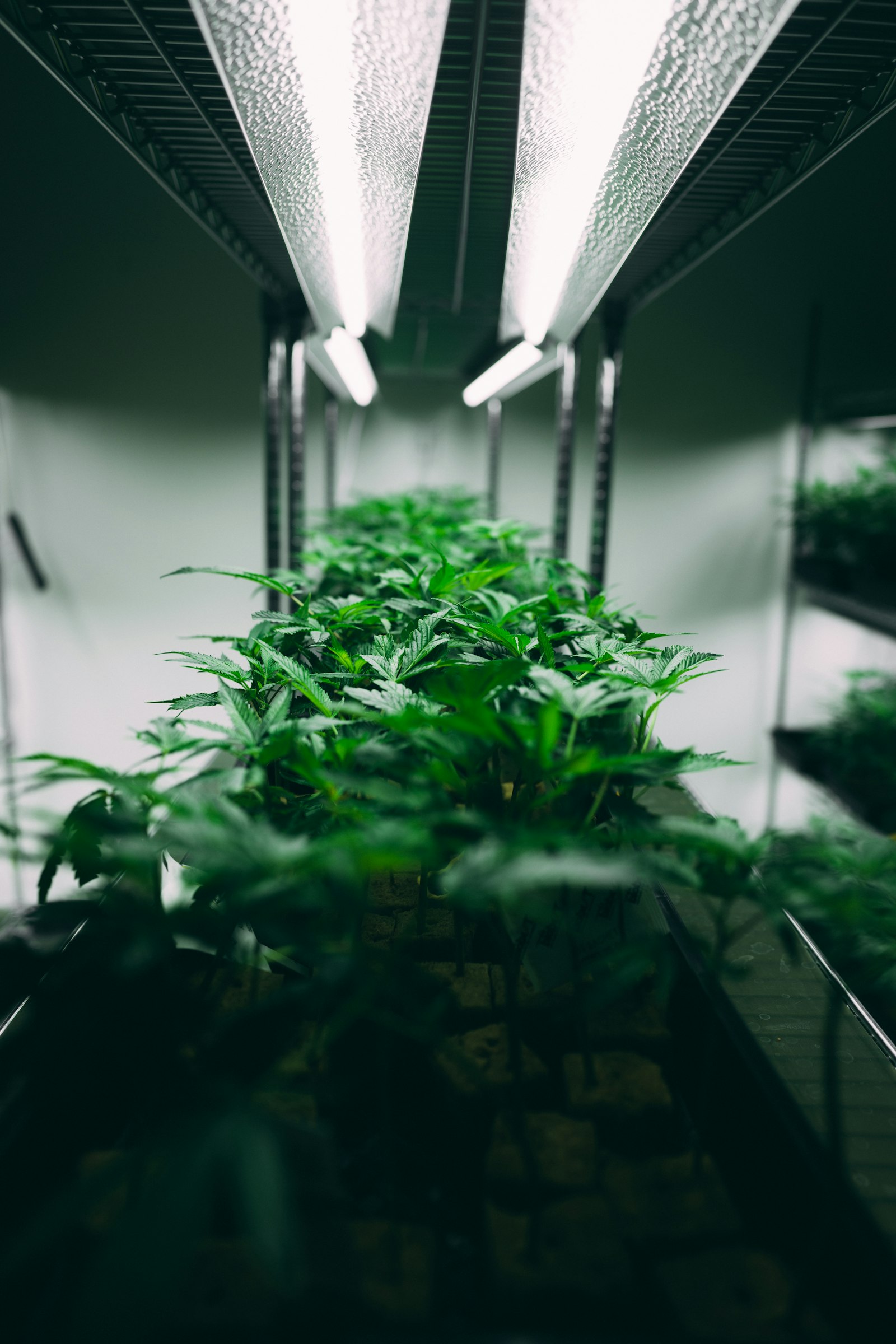
In a windowless space, your LED lamp is the sun. There is no compromise here - the quality and quantity of light directly decide whether your plants thrive.
For leafy greens and herbs, aim for 150-250 µmol/m²/s of PPFD at leaf height, with 14-16 hours of light per day. For the full story on spectrum, PPFD and photoperiod, read LED grow lighting, but to get started remember three rules:
- Choose a full-spectrum (white) LED, not a bare blue-red panel. White light is more pleasant to work under and makes plant problems easier to spot.
- Use a timer. A plug-in timer costing a few euros guarantees your plants get the same photoperiod every day, even when you are away.
- Keep the right distance. For leafy greens the lamp usually sits 25-40 cm above the plants. Too close bleaches leaves, too far stretches them.
Vertical towers with built-in lighting, such as dojdi towers with LED, are especially practical here because the light is already tuned to the plants and distributed over the height - ideal for a narrow corner of a basement or pantry.
Step 2: Heat - cold basements and warm flats
Basements and garages are often cold, especially in winter. Most leafy greens and herbs grow best at 18-24 °C air temperature. Lettuce tolerates cooler conditions (around 15 °C) and grows more slowly but sweeter; basil, by contrast, hates the cold and starts to suffer below 15 °C.
- Too cold: LED lamps and the water pump add a little heat. If it is still cold, a heating mat under the reservoir or a small thermostat-controlled heater solves the problem. Watch the solution temperature - below 15 °C the roots slow their nutrient uptake.
- Too warm: in summer a closed room can turn into a sauna. A fan, ventilation and moving the grow to a cooler part of the flat all help.
The nutrient solution ideally sits at 18-22 °C. Warm water loses oxygen and invites root disease, so in a warm room keep the reservoir away from any direct heat source.
Step 3: Humidity and air - the quiet enemies of closed spaces
A windowless space has two hidden traps: the air does not change and humidity builds up. Both lead to mould, rot and pest outbreaks.
- Air movement: place a small fan to gently stir the air around the plants. This strengthens stems, dries leaves and makes it harder for mould to take hold. Do not aim it directly and forcefully at tender seedlings.
- Air exchange: plants consume CO2, and in a sealed basement its level drops and growth slows. Crack the door occasionally or fit a small extraction fan to bring in fresh air.
- Humidity: aim for 50-70% relative humidity. Damp basements are often too high - a dehumidifier or better ventilation helps. Dry, heated flats in winter can run too low, which leaves plants thirsty.
For the full picture on balancing heat, humidity and air (including the concept of VPD), see Temperature, humidity and airflow.
Step 4: Cleanliness and algae in the dark
Good news for dark spaces: without natural light, algae struggle to develop, because they need light. A basement therefore often has fewer problems with green slime than a sunny balcony. Still keep the reservoir covered and clean the system periodically - more on that in Cleaning and algae.
What does it cost to run?
A common beginner worry: won't my electricity bill explode? It won't. A modern LED for a home tower typically draws 20-40 W. At 16 hours a day that is about 0.3-0.6 kWh per day, or just a few euros a month - less than you would pay for a few shop-bought heads of lettuce. The water pump draws almost nothing. The biggest saving comes from LED efficiency (measured in µmol/J): a better diode gives more light per watt, so you pay less electricity for the same harvest. That is why it pays to look at a lamp's efficiency, not just its price.
What to grow without sun
The most rewarding crops for spaces without natural light:
- Lettuces and leafy greens (lamb's lettuce, rocket, kale, chard) - modest light needs, quick to harvest.
- Herbs (basil, parsley, chives, mint, coriander) - intense flavour and high value per square.
- Sprouts and microgreens - ready in 1-3 weeks, tolerant of low light and ideal for beginners.
Fruiting crops (tomato, pepper) are possible too, but they demand a stronger lamp (400-600 µmol/m²/s) and more warmth, so leave them until you have some experience. For choosing, see Best plants for beginners.
A typical basement or pantry setup
- A vertical tower or shelf with LED lighting against a wall.
- A timer set to 14-16 hours of light.
- A small fan for gentle air movement.
- A thermometer and hygrometer (cheap, ~5 euros) to monitor heat and humidity.
- A heating mat in winter or a dehumidifier in a damp basement, as needed.
With that setup, a dark, unused corner becomes a year-round source of fresh salad - regardless of the weather outside.
Key takeaways
- Without natural light, the LED lamp is your sun: full-spectrum, 150-250 µmol/m²/s, 14-16 hours on a timer.
- Heat is the second challenge: aim for 18-24 °C air and 18-22 °C solution; heat cold basements, cool warm flats.
- Move the air with a small fan and ensure fresh-air exchange for CO2 and against mould.
- Keep humidity at 50-70%; damp basements often need dehumidifying.
- Less algae in the dark is a genuine advantage of closed spaces. Start with lettuces, herbs and microgreens.
Related articles: LED grow lighting | Temperature, humidity and airflow | Best plants for beginners | Cleaning and algae
Related articles
 💡 Light & environment
LED grow lighting: spectrum, PPFD and photoperiod
Light is food for a plant. Learn what spectrum, PPFD, DLI and photoperiod really mean, and exactly how much light your lettuce, herbs and fruiting crops need to thrive.
 💡 Light & environment
Temperature, humidity and airflow
Light and nutrients are only half the story; the climate around the plant is the other half. Learn the ideal ranges for temperature, humidity and airflow, plus the basics of VPD.